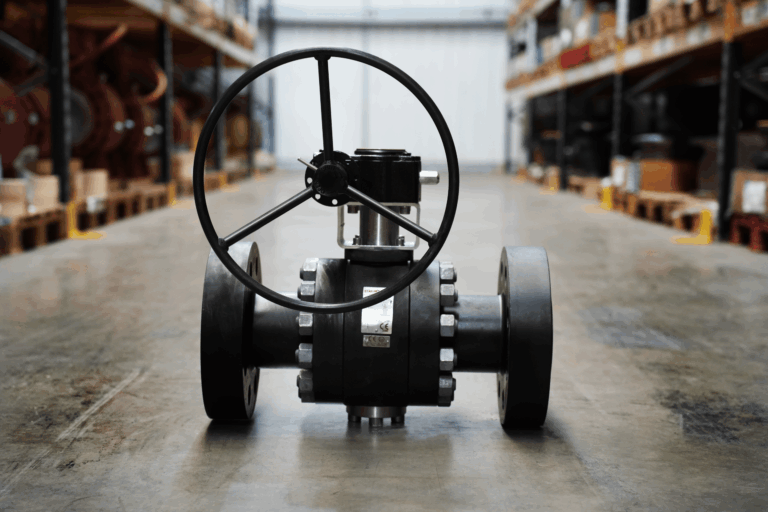
While the valve body often receives the most attention, it is the control valve trim that determines how a valve will perform. The trim refers to the internal components responsible for controlling flow through the valve. Different control valve trim types are designed to manage pressure, velocity, noise and flow characteristics in different ways, making trim selection a critical part of valve specification.
In this guide, we’ll explain what trim is in a control valve, explore the most common control valve trim types and discuss the applications each is best suited for.
What is Trim in a Control Valve?
Control valve trim refers to the internal components that come into direct contact with the process fluid and regulate flow through the valve. Trim configurations will vary between valve designs, they will typically include:
- Plug – The movable component that regulates flow by changing its position relative to the seat
- Seat – The sealing surface that works with the plug to control and shut off flow through the valve
- Cage – A guiding and flow-control component that helps stabilise the plug and determines the valve’s flow characteristics
- Stem – The connecting component that transfers movement from the actuator to the plug, allowing the valve to open and close
As a valve moves between open and closed positions, the trim controls the flow path and determines how fluid passes through the valve. The design of the trim directly influences:
- Flow capacity
- Pressure reduction
- Noise levels
- Cavitation resistance
- Control accuracy
- Valve reliability
For many applications, selecting the correct trim is just as important as selecting the correct valve.
Why is Control Valve Trim Important?
Control valve trim does far more than simply regulate flow.
The trim is responsible for managing the energy within the process fluid as it passes through the valve. Poor trim selection can result in excessive vibration, cavitation, noise, erosion and reduced valve lifespan. The correct trim design therefore helps:
- Maintain stable control
- Improve valve reliability
- Reduce maintenance requirements
- Extend service life
- Minimise noise and vibration
- Protect internal valve components
This becomes particularly important in severe service applications involving high pressure drops or aggressive process conditions.
Understanding Different Control Valve Trim Types
Different trim designs are developed to address different process challenges. The most suitable option depends on a range of factors such as pressure differential, flow characteristics, noise requirements and the risk of cavitation.
The table below provides a high-level overview of common control valve trim types.
| Trim Type | Primary Function | Typical Applications |
| Cage-guided trim | General flow control and stability | Process industries, utilities, manufacturing |
| Multi-stage trim | Pressure reduction across multiple stages | High pressure applications, severe service duties |
| Drilled hole trim | Noise reduction and cavitation control | Steam, gas and liquid pressure reduction |
| Tortuous path trim | Maximum energy dissipation and severe service control | Critical applications with extreme pressure drops |
Cage-Guided Trim
Cage-guided trim is one of the most commonly used control valve trim types.
In this design, a cage surrounds and guides the plug, helping maintain accurate alignment throughout valve travel. This provides excellent stability and control performance across a wide operating range.
Advantages of Cage-Guided Trim
- Accurate flow control
- Good stability
- Reduced vibration
- Reliable performance
- Suitable for a wide range of applications
Because of its versatility, cage-guided trim is often used in standard industrial control valve applications where severe service conditions are not present.
Typical Applications
Cage-guided trim is commonly found in:
- Water treatment systems
- Manufacturing facilities
- Chemical processing plants
- Utility services
- General process control applications
Multi-Stage Trim
Multi-stage trim is designed specifically for applications involving high pressure drops.
Rather than allowing the entire pressure reduction to occur in a single step, the trim gradually reduces pressure through multiple stages.
This controlled pressure reduction helps prevent damaging flow conditions from developing inside the valve.
Advantages of Multi-Stage Trim
- Reduces fluid velocity
- Minimises vibration
- Improves pressure control
- Protects internal components
- Extends valve service life
Multi-stage trim is frequently used in severe service control valves where conventional trim designs would experience accelerated wear.
Typical Applications
Common applications include:
- Steam letdown systems
- Boiler feedwater control
- Turbine bypass systems
- High pressure gas control
- Power generation facilities
Drilled Hole Trim
Drilled hole trim uses a series of carefully engineered flow passages to control fluid movement through the valve.
By dividing the flow into multiple smaller streams, the trim helps reduce turbulence, lower noise levels and manage pressure recovery more effectively.
Advantaged of Drilled Hole Trims
- Reduces aerodynamic noise
- Improves flow distribution
- Helps manage cavitation
- Reduces vibration
- Enhances control stability
This makes drilled hole trim particularly effective in applications where noise reduction is a key consideration.
Typical Applications
Drilled hole trim is commonly used in:
- Steam systems
- High pressure gas applications
- Pressure reduction stations
- Noise-sensitive installations
- Process industries
Tortuous Path Trim
Tortuous path trim is one of the most advanced control valve trim types available.
Instead of allowing fluid to pass through a relatively direct flow path, the trim forces the fluid through a complex network of passages. This dissipates energy gradually and significantly reduces the damaging effects associated with severe pressure reduction.
Advantaged of Tortuous Path Trim
- Exceptional noise attenuation
- Superior cavitation resistance
- Reduced erosion
- Improved reliability
- Effective in extreme operating conditions
Tortuous path trim is often found in some of the world’s most demanding severe service applications.
Typical Applications
Typical duties of valves with this trim type includes:
- Severe pressure letdown
- Anti-cavitation applications
- Power generation systems
- Oil and gas facilities
- Petrochemical plants
- Critical process infrastructure
How Trim Design Helps Prevent Cavitation
One of the most important functions of specialist trim designs is managing cavitation.
Cavitation occurs when liquid pressure falls below its vapour pressure, causing vapour bubbles to form and collapse. These collapsing bubbles generate shockwaves that can damage internal valve components.
Advanced trim designs such as multi-stage trim, drilled hole trim and tortuous path trim all help control pressure reduction and fluid velocity, reducing the likelihood of damaging cavitation occurring. This is one of the key reasons specialised trim technology is often specified for severe service applications.
Does Control Valve Trim Size Matter?
Control valve trim size plays an important role in determining valve performance, influencing everything from flow capacity to control range to pressure recovery to velocity management.
In some applications, a reduced trim size may be selected to improve control at lower flow rates, while larger trim configurations may be required to accommodate higher process demands.
Selecting the appropriate control valve trim size requires consideration of both current operating conditions and future process requirements. This is why trim selection should always form part of the wider valve sizing and specification process.
Choosing the Right Control Valve Trim
There is no single trim design that is suitable for every application. The best choice depends on factors such as:
- Process fluid
- Pressure differential
- Flow rate
- Temperature
- Noise requirements
- Cavitation risk
- Reliability objectives
While cage-guided trim may be ideal for standard process duties, severe service applications often benefit from advanced multi-stage, drilled hole or tortuous path trim technologies.
Understanding these requirements early in the specification process can help improve valve performance and reduce lifecycle costs.
Conclusion
Control valve trim is one of the most important factors influencing valve performance, reliability and service life. From cage-guided trim for general process control to advanced tortuous path designs for severe service applications, different control valve trim types are engineered to address different operational challenges.
If you’re specifying a control valve, evaluating trim options or looking to improve reliability within an existing process, ACV can help. Our team provides expert guidance on control valve trim selection, valve sizing and severe service applications to ensure the most effective solution for your requirements. Contact us today to discuss your application.