Audio
9 min listen
Why Perar Trunnion-Mounted Ball Valves Are Trusted in High-Pressure Oil & Gas Applications
Isolation reliability is critical in the oil and gas industry. Valves used in upstream production, pipeline transmission, and refining must operate safely under high pressure, extreme temperatures and aggressive media.
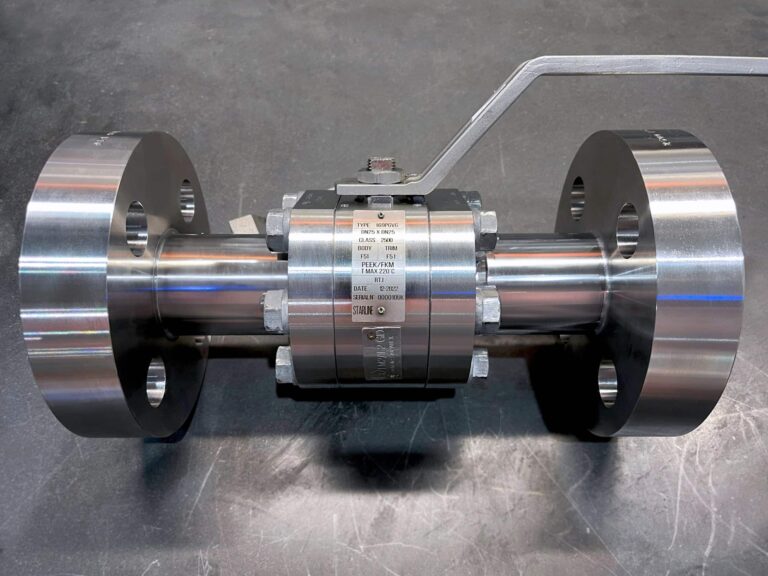
For these demanding conditions, engineers often specify the trunnion mounted ball valve from Perar. Designed for critical service and built to international standards, these valves combine robust forged construction, advanced sealing technology and proven performance in severe environments.
This guide explains why Perar valves are widely used in high-pressure oil and gas applications and how their design supports reliable long-term operation.
What Is a Trunnion-Mounted Ball Valve?
A trunnion-mounted ball valve is a quarter-turn valve where the ball is mechanically supported by shafts at the top and bottom (the trunnion) rather than floating freely inside the body.
In a floating ball valve, line pressure pushes the ball against the downstream seat to create the seal. While effective in lower-pressure systems, this design can generate high torque and seat damage in large or high-pressure valves.
Trunnion valves solve this by anchoring the ball within the valve body, allowing pressure to be absorbed by the valve structure instead of the seats.
This design offers several advantages:
Lower operating torque
Improved sealing under high pressure
Reduced seat wear
Greater reliability for large valve sizes
Because of these benefits, high pressure trunnion ball valves are widely used for pipeline isolation, refining processes and offshore oil and gas systems.
Forged Body Construction for Strength and Durability
One of the key features of many Perar trunnion mounted ball valves for high-temperature service is their forged body construction.
Forging compresses the metal grain structure during manufacturing, producing components that are stronger and more resistant to fatigue than cast equivalents. This structural strength is essential when valves operate in high-pressure systems where mechanical stresses are significant.
Forged body ball valves offer several advantages:
Greater structural integrity
Higher pressure containment capability
Improved resistance to mechanical fatigue
Reduced risk of defects such as porosity, a common issue with cast valves
Perar valves are available in a wide range of materials to suit different service conditions, including:
Carbon steel
Stainless steel
Duplex and super duplex alloys
High-performance alloys such as Inconel
These material options allow valves to operate safely in corrosive, high-temperature or high-pressure oil and gas environments.
API 6D Certification and Industry Compliance
Oil and gas operators require valves that meet recognised international standards for safety, testing and performance. Many Perar valves are designed to comply with the requirements of an API 6D ball valve, the primary standard for pipeline valves.
API 6D certification includes requirements for:
Pressure and temperature ratings
Hydrostatic testing
Fugitive emissions control
Fire-safe performance
Double block and bleed capability
In addition to API standards, Perar valves are typically manufactured in accordance with other global requirements, including:
ASME B16.34 pressure-temperature design rules
ISO 15848 fugitive emissions standards
API 607 fire safety testing
PED (Pressure Equipment Directive) for European compliance
These certifications ensure valves meet strict engineering and safety requirements for critical oil and gas isolation duties.
Designed for Severe Service Applications
Many oil and gas processes involve severe service conditions where standard valve designs may struggle to maintain performance.
Examples include:
Abrasive production streams containing sand or solids
High-temperature process media
High cycle or high differential pressure systems
Aggressive or corrosive chemicals
To handle these environments, Perar offers severe service ball valves, including severe service metal seated ball valves designed specifically for demanding applications.
Metal-Seated Ball Valves
In demanding oil and gas environments, severe service metal seated ball valves are often preferred over soft-seated designs. Soft seats rely on polymer materials such as PTFE to create a seal, but these can degrade under high temperatures or abrasive media.
Metal-seated valves use precision-machined metal sealing surfaces on both the ball and seat, typically hard-faced with coatings like tungsten carbide or chrome carbide. When the valve closes, spring-energised seats press the ball into the seat ring, creating a durable metal-to-metal seal that maintains contact even under high pressure.
This design provides superior resistance to abrasion, erosion and thermal damage, making severe service metal seated ball valves ideal for applications such as sand-laden production streams, high-temperature processes and abrasive flow conditions where soft seats would quickly fail.
These surfaces are often coated with materials such as:
Tungsten carbide
Chrome carbide
Hard chrome
These coatings significantly improve resistance to:
Abrasion
Erosion
High temperatures
Particulate damage
As a result, metal-seated designs are commonly used in applications where soft seats would rapidly degrade, ensuring longer service life and more reliable isolation.
Advanced Sealing and Safety Features
Reliable sealing is essential for any oil and gas isolation valve, particularly in high-pressure systems where leakage can pose significant operational and safety risks.
Perar trunnion ball valves incorporate several design features that enhance sealing performance and safety.
Common features include:
Spring-energised seats
These maintain constant contact between the ball and seats, ensuring tight sealing even at low pressure.
Double block and bleed capability
This allows pressure to be isolated on both sides of the valve while the cavity between seats is safely vented.
Anti-blowout stem design
Prevents the valve stem from being forced out under pressure.
Low-emission sealing systems
Designed to minimise fugitive emissions in compliance with environmental standards.
These design elements contribute to the valve’s reputation as a reliable high-pressure trunnion ball valve for critical process systems.
Applications Across the Oil and Gas Industry
Because of their robust design and reliability, high-temperatire Perar trunnion mounted ball valves are used in a wide range of oil and gas applications.
Typical installations include:
Pipeline isolation
Transmission pipelines require valves capable of handling high pressure while maintaining zero leakage.
Refinery and petrochemical processing
Severe service valves are often required to handle abrasive or high-temperature process media.
Offshore platforms
Corrosion-resistant materials and compact designs are essential in offshore environments.
Gas transmission and distribution
Reliable isolation valves help ensure the safety and stability of gas infrastructure networks.
These applications require valves that can operate reliably over long periods with minimal maintenance.
Long-Term Reliability and Lifecycle Performance
For oil and gas operators, valve reliability is closely linked to lifecycle cost and operational risk.
Trunnion-mounted ball valves are widely preferred because they offer:
Lower operating torque
Reduced seat wear
High cycle durability
Longer maintenance intervals
Reliable sealing performance
Combined with forged construction and strict quality control, these factors make the Perar range a dependable solution for critical infrastructure.
When correctly specified and maintained, these valves can provide decades of reliable service in demanding oil and gas environments.
UK Stock and Engineering Support
Selecting the correct API 6D ball valve requires careful consideration of pressure class, materials, sealing configuration and actuation requirements.
With UK-based stock and engineering support, customers can benefit from:
Fast availability of Perar trunnion mounted ball valves
Technical specification and sizing advice
Valve automation and actuation packages
Testing, certification, and documentation support
Application guidance for severe service conditions
Whether for a pipeline project, refinery upgrade or critical isolation duty, expert support ensures the correct valve is selected for the application.
Need advice or urgent delivery?
Contact our valve specialists to discuss available UK stock of Perar trunnion ball valves and engineering support services.
Why Perar Trunnion-Mounted Ball Valves Are Trusted in High-Pressure Oil & Gas Applications
Isolation reliability is critical in the oil and gas industry. Valves used in upstream production, pipeline transmission, and refining must operate safely under high pressure, extreme temperatures and aggressive media.
For these demanding conditions, engineers often specify the trunnion mounted ball valve from Perar. Designed for critical service and built to international standards, these valves combine robust forged construction, advanced sealing technology and proven performance in severe environments.
This guide explains why Perar valves are widely used in high-pressure oil and gas applications and how their design supports reliable long-term operation.
What Is a Trunnion-Mounted Ball Valve?
A trunnion-mounted ball valve is a quarter-turn valve where the ball is mechanically supported by shafts at the top and bottom (the trunnion) rather than floating freely inside the body.
In a floating ball valve, line pressure pushes the ball against the downstream seat to create the seal. While effective in lower-pressure systems, this design can generate high torque and seat damage in large or high-pressure valves.
Trunnion valves solve this by anchoring the ball within the valve body, allowing pressure to be absorbed by the valve structure instead of the seats.
This design offers several advantages:
- Lower operating torque
- Improved sealing under high pressure
- Reduced seat wear
- Greater reliability for large valve sizes
Because of these benefits, high pressure trunnion ball valves are widely used for pipeline isolation, refining processes and offshore oil and gas systems.
Forged Body Construction for Strength and Durability
One of the key features of many Perar trunnion mounted ball valves for high-temperature service is their forged body construction.
Forging compresses the metal grain structure during manufacturing, producing components that are stronger and more resistant to fatigue than cast equivalents. This structural strength is essential when valves operate in high-pressure systems where mechanical stresses are significant.
Forged body ball valves offer several advantages:
- Greater structural integrity
- Higher pressure containment capability
- Improved resistance to mechanical fatigue
- Reduced risk of defects such as porosity, a common issue with cast valves
Perar valves are available in a wide range of materials to suit different service conditions, including:
- Carbon steel
- Stainless steel
- Duplex and super duplex alloys
- High-performance alloys such as Inconel
These material options allow valves to operate safely in corrosive, high-temperature or high-pressure oil and gas environments.
API 6D Certification and Industry Compliance
Oil and gas operators require valves that meet recognised international standards for safety, testing and performance. Many Perar valves are designed to comply with the requirements of an API 6D ball valve, the primary standard for pipeline valves.
API 6D certification includes requirements for:
- Pressure and temperature ratings
- Hydrostatic testing
- Fugitive emissions control
- Fire-safe performance
- Double block and bleed capability
In addition to API standards, Perar valves are typically manufactured in accordance with other global requirements, including:
- ASME B16.34 pressure-temperature design rules
- ISO 15848 fugitive emissions standards
- API 607 fire safety testing
- PED (Pressure Equipment Directive) for European compliance
These certifications ensure valves meet strict engineering and safety requirements for critical oil and gas isolation duties.
Designed for Severe Service Applications
Many oil and gas processes involve severe service conditions where standard valve designs may struggle to maintain performance.
Examples include:
- Abrasive production streams containing sand or solids
- High-temperature process media
- High cycle or high differential pressure systems
- Aggressive or corrosive chemicals
To handle these environments, Perar offers severe service ball valves, including severe service metal seated ball valves designed specifically for demanding applications.
Metal-Seated Ball Valves
In demanding oil and gas environments, severe service metal seated ball valves are often preferred over soft-seated designs. Soft seats rely on polymer materials such as PTFE to create a seal, but these can degrade under high temperatures or abrasive media.
Metal-seated valves use precision-machined metal sealing surfaces on both the ball and seat, typically hard-faced with coatings like tungsten carbide or chrome carbide. When the valve closes, spring-energised seats press the ball into the seat ring, creating a durable metal-to-metal seal that maintains contact even under high pressure.
This design provides superior resistance to abrasion, erosion and thermal damage, making severe service metal seated ball valves ideal for applications such as sand-laden production streams, high-temperature processes and abrasive flow conditions where soft seats would quickly fail.
These surfaces are often coated with materials such as:
- Tungsten carbide
- Chrome carbide
- Hard chrome
These coatings significantly improve resistance to:
- Abrasion
- Erosion
- High temperatures
- Particulate damage
As a result, metal-seated designs are commonly used in applications where soft seats would rapidly degrade, ensuring longer service life and more reliable isolation.
Advanced Sealing and Safety Features
Reliable sealing is essential for any oil and gas isolation valve, particularly in high-pressure systems where leakage can pose significant operational and safety risks.
Perar trunnion ball valves incorporate several design features that enhance sealing performance and safety.
Common features include:
Spring-energised seats
These maintain constant contact between the ball and seats, ensuring tight sealing even at low pressure.
Double block and bleed capability
This allows pressure to be isolated on both sides of the valve while the cavity between seats is safely vented.
Anti-blowout stem design
Prevents the valve stem from being forced out under pressure.
Low-emission sealing systems
Designed to minimise fugitive emissions in compliance with environmental standards.
These design elements contribute to the valve’s reputation as a reliable high-pressure trunnion ball valve for critical process systems.
Applications Across the Oil and Gas Industry
Because of their robust design and reliability, high-temperatire Perar trunnion mounted ball valves are used in a wide range of oil and gas applications.
Typical installations include:
Pipeline isolation
Transmission pipelines require valves capable of handling high pressure while maintaining zero leakage.
Refinery and petrochemical processing
Severe service valves are often required to handle abrasive or high-temperature process media.
Offshore platforms
Corrosion-resistant materials and compact designs are essential in offshore environments.
Gas transmission and distribution
Reliable isolation valves help ensure the safety and stability of gas infrastructure networks.
These applications require valves that can operate reliably over long periods with minimal maintenance.
Long-Term Reliability and Lifecycle Performance
For oil and gas operators, valve reliability is closely linked to lifecycle cost and operational risk.
Trunnion-mounted ball valves are widely preferred because they offer:
- Lower operating torque
- Reduced seat wear
- High cycle durability
- Longer maintenance intervals
- Reliable sealing performance
Combined with forged construction and strict quality control, these factors make the Perar range a dependable solution for critical infrastructure.
When correctly specified and maintained, these valves can provide decades of reliable service in demanding oil and gas environments.
UK Stock and Engineering Support
Selecting the correct API 6D ball valve requires careful consideration of pressure class, materials, sealing configuration and actuation requirements.
With UK-based stock and engineering support, customers can benefit from:
- Fast availability of Perar trunnion mounted ball valves
- Technical specification and sizing advice
- Valve automation and actuation packages
- Testing, certification, and documentation support
- Application guidance for severe service conditions
Whether for a pipeline project, refinery upgrade or critical isolation duty, expert support ensures the correct valve is selected for the application.
Need advice or urgent delivery?
Contact our valve specialists to discuss available UK stock of Perar trunnion ball valves and engineering support services.